Agentic AIField note
From AI demos to reliable workflows
A practical way to turn an impressive AI demonstration into a bounded workflow: define its job, test its failure paths, and decide what counts as finished.

Agentic AIField note
A practical way to turn an impressive AI demonstration into a bounded workflow: define its job, test its failure paths, and decide what counts as finished.
A demonstration shows that a task can succeed under the conditions you observed. An operating workflow needs a more complete answer: which inputs it accepts, what it is allowed to change, how completion is checked, and who handles an exception. Writing those rules early makes the first implementation easier to evaluate and the first failure easier to explain.
Anthropic’s guide to building agents recommends starting with simple approaches and distinguishing predefined workflows from agents that choose their own steps. Our practical interpretation is to assign autonomy deliberately. If a sequence can be specified and checked in ordinary code, keep it there. Use a model for the uncertain interpretation inside that sequence, rather than making every step an open-ended decision.
Consider an illustrative customer-support workflow, not an Ashlr deployment: an incoming message is matched to an account, relevant records are retrieved, and a reply is drafted for a person to review. Define the boundary as producing a draft with supporting records. Sending the reply, changing account details and making a commercial commitment are separate actions. A missing or ambiguous account match should stop retrieval and request clarification, not invite the model to guess.
Turn that boundary into acceptance cases. A normal request should produce a draft tied to the right account and source records. An ambiguous identity should produce no cross-account retrieval. Two deliveries of the same message should not create two review tasks. A failed lookup should leave the task visibly incomplete. A late response from an earlier attempt should not overwrite a newer decision. These are proposed requirements for the example; they are not results from tests we have run.

Represent the example as explicit states such as received, awaiting context, ready for review and completed. Give the job an identity that survives retries. Check allowed transitions and permissions outside the prompt, and keep enough evidence to connect each draft to the records it used. In a test environment, delay a lookup and replay a request; inspect final records as well as the response text. A common pitfall is retrying every error the same way. Repeating a read and repeating an action that may already have succeeded need different recovery decisions. Escalate an uncertain write for reconciliation instead of labeling it a failure and immediately trying again.
Choose an owner for the whole handoff, including the queue of incomplete work. For the support example, the useful measures include whether drafts are correct, how much review they need, and whether exceptions reach the right person. Faster generation alone is not the outcome. Agree what the first pilot may do, which mistakes stop it, and what evidence would justify another permission. Do not expand from drafting to sending merely because a few drafts looked convincing; that changes both the possible impact and the acceptance criteria.
Take one existing workflow and write a short operating contract: input, allowed actions, expected output, owner and exception path. Then write one ordinary case, one incomplete case and one repeated request, with the exact final state each should produce. Start with a reversible step and review those cases with the person who will receive the output. Keep the contract small enough that a teammate can explain where the model’s authority ends.
Source material behind this field note. Our practical implications are Ashlr’s interpretation.
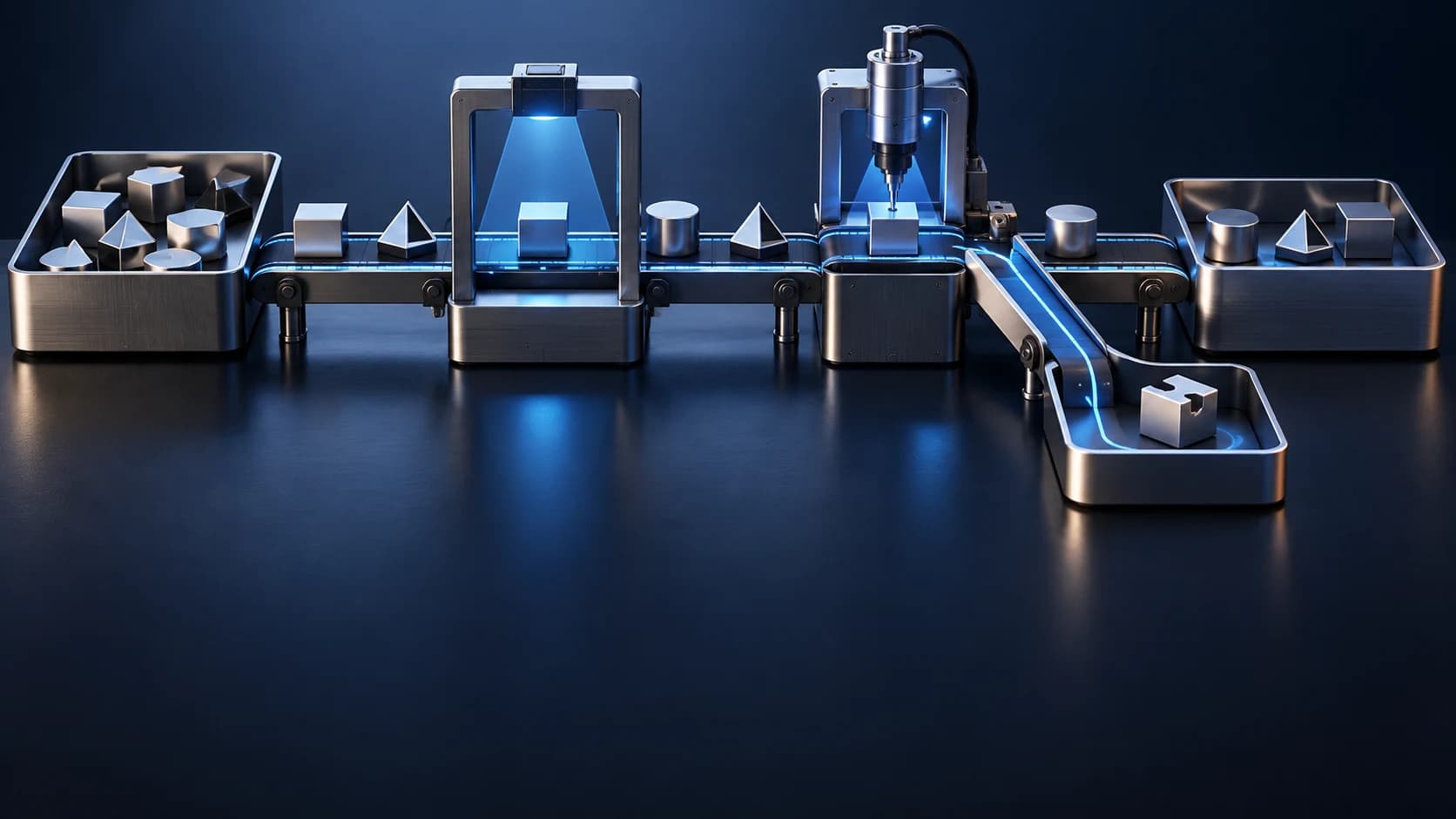
Field notes explain an engineering or business practice. They are not reports of a new event. Cover artwork is illustrative.
Ashlr release
AI-generated illustration
Phantom gained agent-native fleet commands for lane targets, reassigns, and model sets. Multiple products received new documentation and regression tests.

Agentic AIThe briefing
AI-generated illustration
Genie 4 renders real-time simulated environments with physics and audio. Gemini models steer the scenes so agents can rehearse multi-step tasks before deployment. Access remains limited to trusted testers and planned Google AI Ultra subscribers.

Agentic AIThe briefing
AI-generated illustration
OpenAI launched GPT-6.1 Terra, a mid-tier model for computer use and visual reasoning tasks. It costs roughly half as much as GPT-5.6 Terra while running faster on agent workflows.